Lorem ipsum dolor sit amet, consectetur adipiscing elit. Ut elit tellus, luctus nec ullamcorper mattis, pulvinar dapibus leo. Live tellus, luctus nec ullamcorper mattis, pulvinar dapibus leo. Live only one can
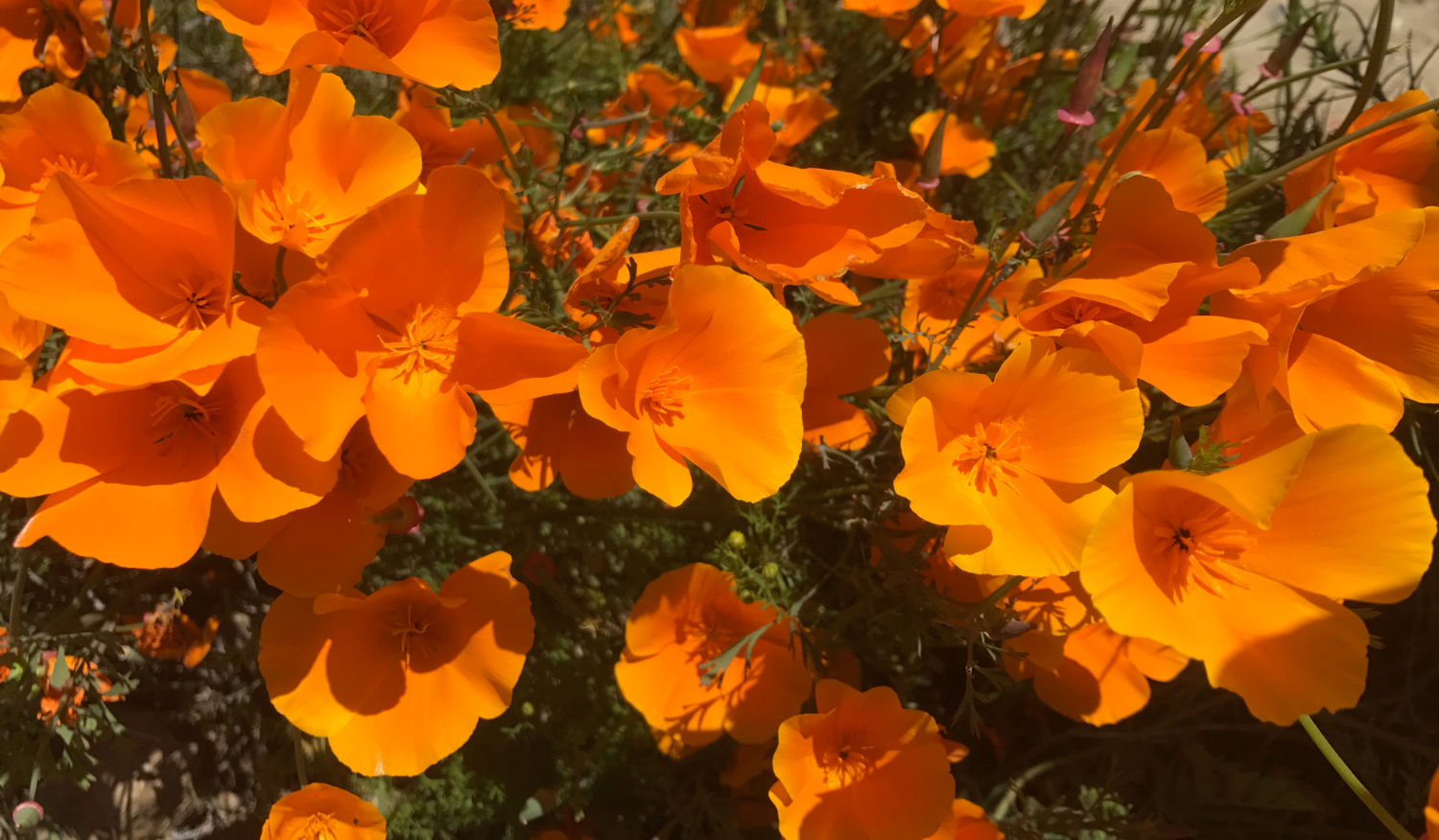
California Poppies
California Poppies
Menu
Box 1
Text box description goes here
Box 2
Text box description goes here
Designing With
Plant Communities
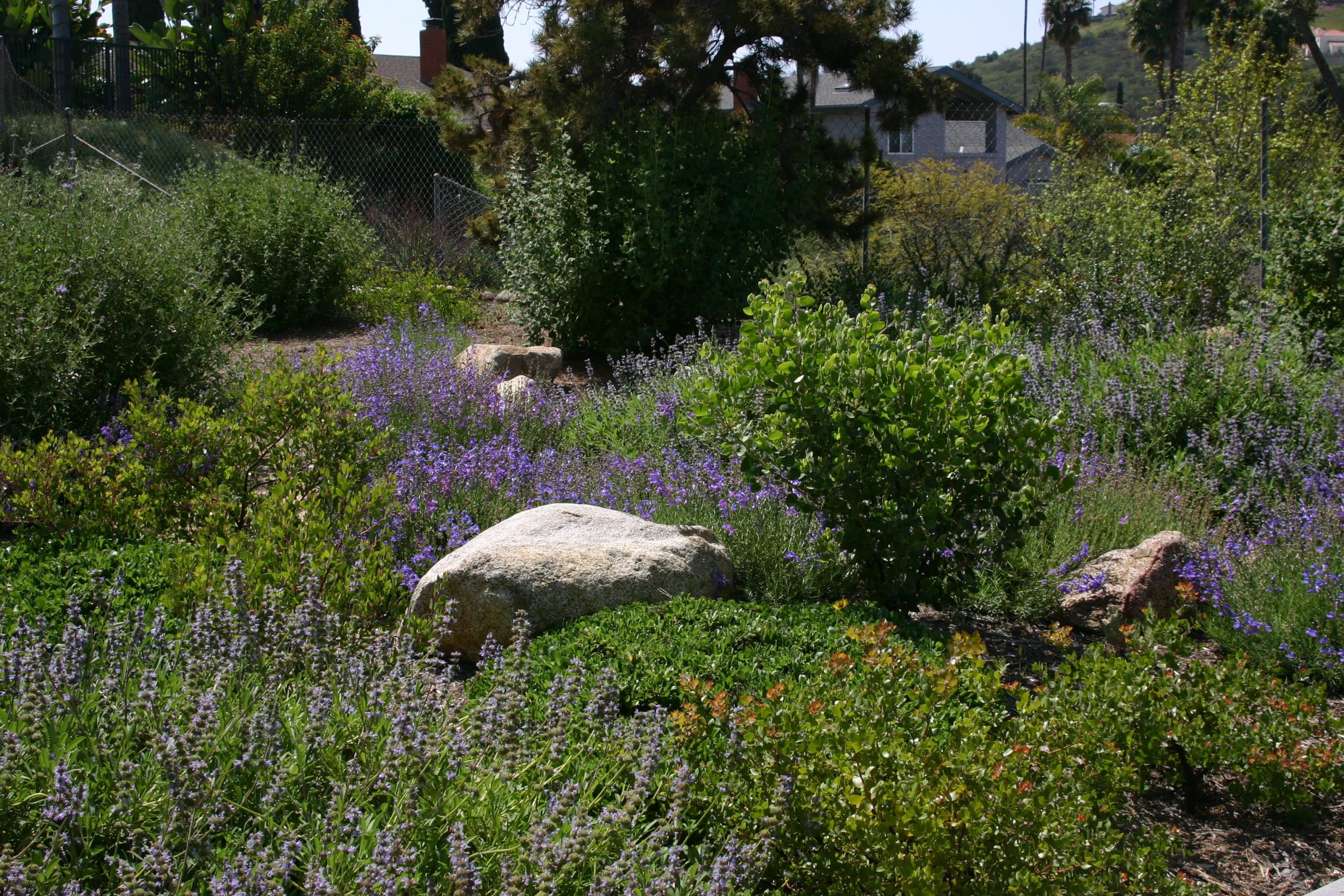
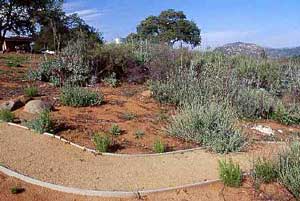
One of our philosophies is to design by plant community. This takes advantage of the natural companionship that occurs when the right plants are placed together. This first image is a hillside in Poway (north of San Diego), and the California native plant community is Coastal Sage Scrub. A few of the plants, namely the Coyote brush and the buckwheat, are native to the site. The rest were planted by us. If you look carefully, you’ll see there are citrus mixed in as well! They are actually the only plants in the group receiving any water, and it turns out, they get along fine with the rest of the community. You might also find it interesting that we had to use jackhammers to get into the decomposed granite slope. That’s right, jackhammers. And forget any soil amendments. We love to landscape a clean, scraped site. There’s no contamination from organic matter, fertilizer, pathogens, or weeds.
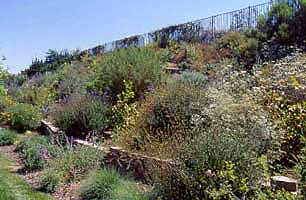
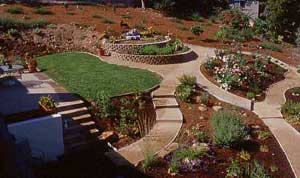
Zoning becomes second nature when designing by plant community. Grouping plants ecologically ensures that their water needs are shared by surrounding companions. In this backyard, the lawn, vegetable garden, and roses are centrally located, and share a high demand for moisture. The lawn is kept fairly minimal in size and close to the back patio. Next to the lawn is a small riparian area with dogwoods and yerba buena. Outward from these areas, the chaparral and coastal sage plants are self-supporting and require much less water. The garden was only four months old when this photo was taken. It was not long before the ceanothus ground cover on the upper slopes was 4-6 feet wide and within in a year had almost filled the slope completely
Here is the same garden about 18 months later. You can really see the zoning of the different plantings. A Mediterranean garden in front, vegetable garden across the lawn, a rose garden on the far right and natives surrounding the site. A colorful and functional with the feel of an English country garden.
HABITAT RESTORATION
To quote Bert Wilson, owner of Las Pilitas Nursery, ecosystem restoration is defined as “a planting composed of 100% California native plants with components from the pioneer, sub-climax and climax communities. The ecosystem should represent the native appearance in the 1600’s, have no alien, foreign, exotic components present (i.e. weeds, plastics, fertilizers, soil amendments, etc.), and maintained for 1-3 years with no water.” Notice that Bert uses the word “restoration” and not “revegetation”, which is no more specifically defined than covering the ground with vegetation. His protocols are stringent but straightforward, and we believe him to be among the great environmental ecologists of today. We have adopted his methodology, and the results have met with unparalleled success.
Weed Control: The Most Essential Step
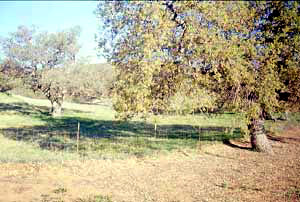
When working to restore native ecosystems, weed control becomes absolutely paramount. The dramatic effect is seen in this photo, comparing a mature Englemann oak on the client’s property with a neighbor’s tree in the distance. Notice that the tree in the foreground has had all weeds removed, whereas the neighbor’s tree is still choked in oat grass, mustard, fillaree, and brome (all non-native). The client’s tree is vigorous, it’s yellow color coming from the blossoms that are covering it. It is currently putting on 3 feet of new growth per year. The neighbor’s tree is barely surviving, no flowers (and no acorns-no babies). This photo really illustrates the concept of weeds vs. natives as an ecological switch-you either have weeds, or you have natives. They do not co-exist well. Next time you chance upon a healthy stand of chaparral, take a look inside. There are no weeds. If you can get to 70% canopy coverage with your native plant community, and you use good mulch and no “artificial life-support”, then the natural weed inhibiting characteristics of your native landscape kick in.
Natives Come Roaring Back
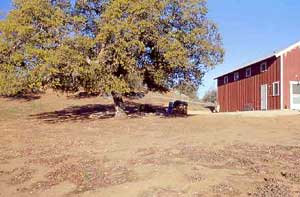
Weed control spells the difference between success and failure on a native restoration. Note the health of the oak trees and the return of long dormant and volunteer natives back on to the clean site.